


In the fast lane of the cold chain industry, premium wagyu beef, biopharmaceuticals and fresh fruits and vegetables are constantly engaged in a silent race against time and temperature. Many traditional cold rooms suffer from uneven cooling distribution due to ageing equipment. Some businesses mistakenly believe that simply "turning up the cooling" will solve the problem, only to end up with soaring electricity bills.
What is even more alarming is that a temperature deviation of just 2°C can be enough to render an entire batch of high-value goods unusable, such as wagyu thawing and leaking blood, vaccines losing their efficacy or fresh fruit spoiling more quickly. The chain reaction caused by temperature fluctuations may ultimately lead to compensation claims, loss of customers and even damage to brand reputation.
To break free from the cycle of high energy consumption and high product loss, the key is to move beyond the mindset of treating a cold room as simply a "big refrigerator" and instead adopt a more professional and scientific approach to planning and managing cold room temperature zones.
What Is a Cold Room?
Temperature Zoning in Modern Cold Rooms
A modern cold room is far more than just a "big refrigerator." It is a precise thermodynamic management system. Storing different types of goods together not only increases the risk of cross-contamination and odour transfer, but also reduces overall refrigeration efficiency because different products require different temperature conditions, resulting in higher energy costs.
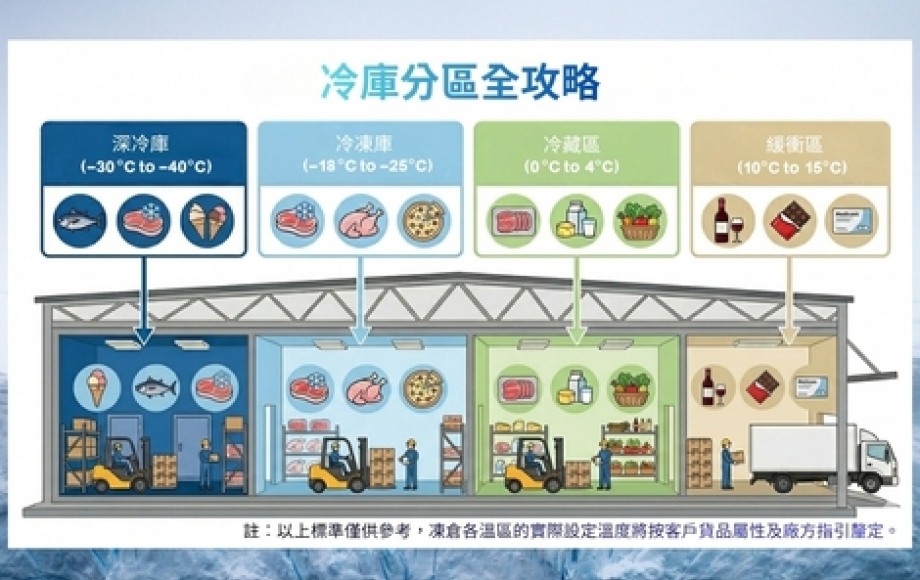
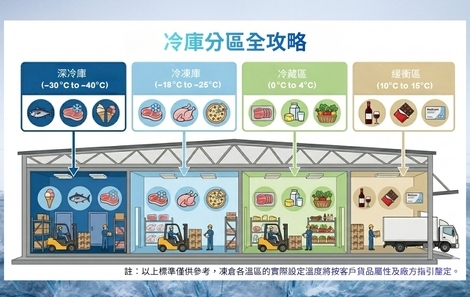
To slow product deterioration, prevent contamination, and improve energy efficiency, cold rooms must be carefully divided into different temperature zones according to the characteristics of the goods stored. The four most common core cold room temperature zones are as follows:
- Deep Cold Storage (-30°C to -40°C)
Suitable for highly temperature-sensitive products such as ice cream, premium tuna, and long-term storage of medical samples. This zone helps rapidly lock in quality and preserve activity. - Freezer Storage (-18°C to -25°C)
Mainly used for the long-term storage of frozen meat, poultry and seafood. It effectively suppresses microbial activity and extends shelf life. - Frozen Storage (0°C to 4°C)
Suitable for fast-moving fresh produce, dairy products and chilled meat. These products have low tolerance for temperature fluctuations and may suffer chilling injury or spoilage if not properly managed. - Constant Temperature Storage (10°C to 15°C)
Suitable for products that require a stable environment, such as wine, chocolate and certain pharmaceuticals. It also commonly serves as a receiving and dispatch buffer area between low-temperature storage and the outside environment, helping to stabilise temperatures, reduce hot and cold air exchange and minimise condensation risk.
Three Core Technologies for Maintaining Stable Cold Room Temperature Zones
Defining cold room temperature zones is only the first step in cold chain management. The real challenge lies in maintaining stable temperatures in each zone during frequent storage and retrieval operations. This is where engineering design and system integration capabilities are truly tested.
- High-Performance Insulation Materials and Seamless Room Structure Design
To prevent cooling loss, the different cold room temperature zones must be separated by insulation panels with very low thermal conductivity, such as PU or PIR panels. These should be combined with comprehensive moisture-proofing and cold bridge prevention measures to ensure each zone can independently retain its cooling and maintain stable temperatures.
- Airflow Management and Buffer Air Curtain Systems
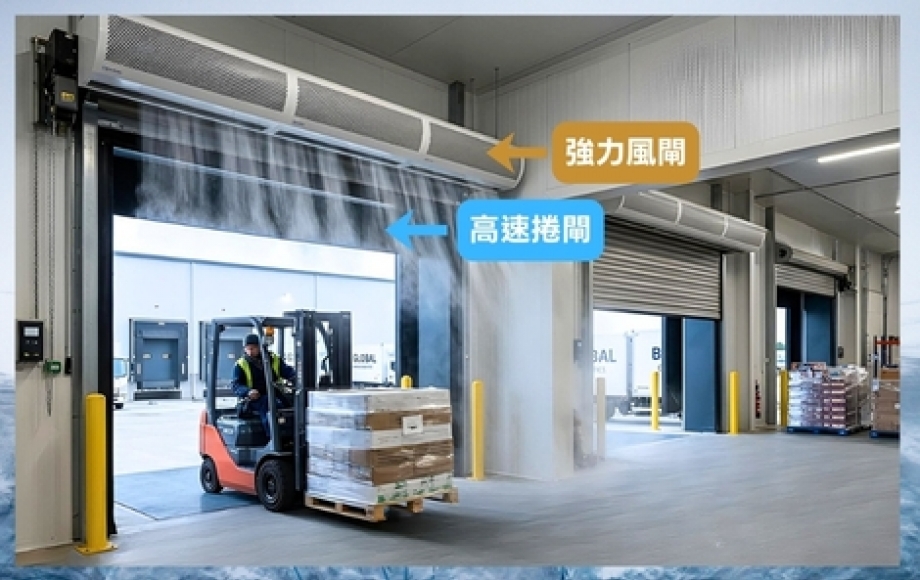
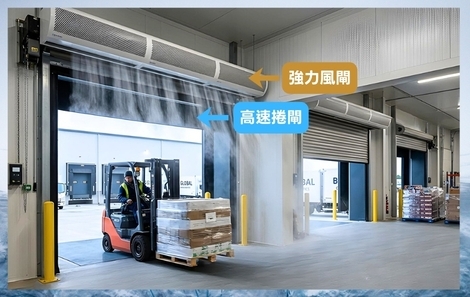
Frequent opening and closing of cold room doors can cause sudden temperature rises. By installing high-speed roll-up doors and heavy-duty air curtains in passageways, an air barrier can be formed quickly when forklifts move in and out, effectively blocking hot air and moisture intrusion and significantly reducing the load on the refrigeration system.
- IoT and 24/7 Intelligent Temperature Control
High-precision IoT sensors can be deployed across different cold room temperature zones for continuous 24-hour monitoring. When data approaches critical thresholds, the system can immediately issue cloud-based alerts and automatically adjust compressor output to control temperature fluctuations at an early stage and reduce the risk of product loss.
Case Study: Cold Room Upgrade for a Large Food Distributor
BPS Global Group assisted a leading local foodservice ingredient distributor solve its cold chain operational challenges. The client's existing warehouse used simple plastic strip curtains to separate fresh meat from frozen seafood, resulting in poorly defined cold room temperature zones. Cold air leaked through gaps in the curtains, condensation and frost formed on the walls, product odours contaminated one another, and monthly product losses reached hundreds of thousands of dollars.
More seriously, one incident of temperature loss of control caused an entire batch of wagyu beef to thaw and leak blood, ultimately costing the client an important business partnership.
After stepping in, our group reconfigured the entire space using high-specification PIR insulation panels and precisely created three independent cold room temperature zones: a -18°C freezer zone, a 2°C chilled storage zone and a 15°C temperature-controlled receiving and dispatch zone. All zone entrances and exits were equipped with interlocked insulated high-speed doors, and an IoT smart temperature control system was introduced to track temperature changes in each zone around the clock.
Following the upgrade, problems such as odour cross-contamination and frost formation were greatly improved, food loss was significantly reduced, and the refrigeration efficiency of each cold room temperature zone was enhanced. Overall power consumption was reduced by 30%. The client commented, "We used to check the thermometer nervously every day. Now the system detects problems before we do."
BPS Global Is Your Reliable Cold Room Planning and Engineering Expert
Building and maintaining an efficient and stable cold chain logistics centre is far more than a simple renovation project. It is a systems engineering task involving thermodynamics, electromechanical integration, and logistics flow planning. If cold room temperature zones are poorly designed, businesses may face long-term high operating costs, as well as difficult-to-estimate product loss and reputational risks.
BPS Global Group understands the operational pain points of various automated warehousing and cold chain facilities. From initial space planning, cold room temperature zone design and high-specification refrigeration equipment selection, to the later integration of intelligent monitoring systems, our team of professional registered engineers provides tailored one-stop solutions to help clients improve cold chain efficiency, reduce operational risk, and establish more stable and reliable logistics infrastructure.
Contact BPS Global Group today to safeguard your cold chain infrastructure.
Note: The above standards are for reference only. The actual temperature settings for each zone of the cold room will be determined according to the characteristics of the client's goods and the manufacturer's guidelines.