


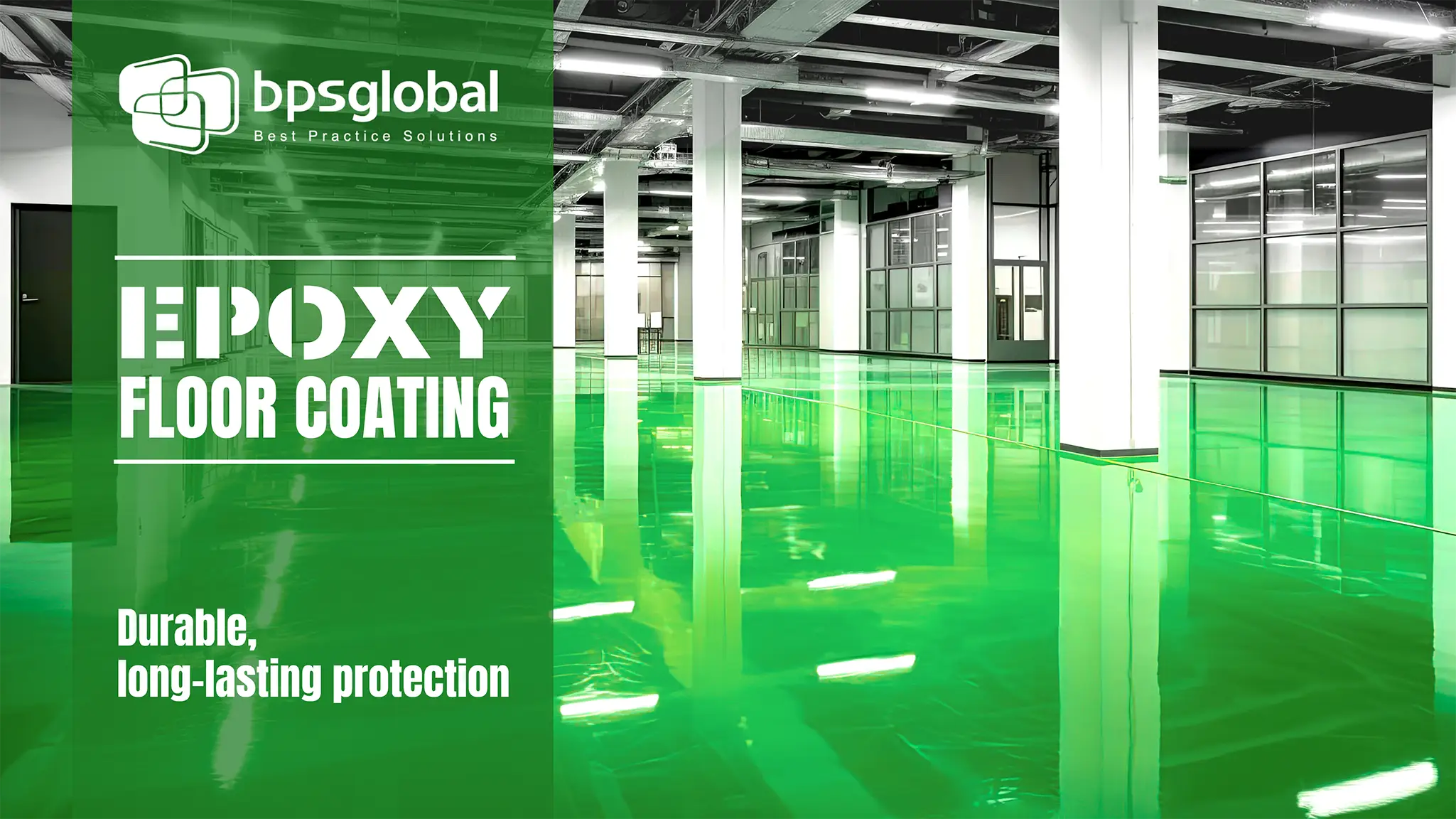
Industrial Epoxy Flooring & Concrete Floor Resurfacing in Hong Kong
Industrial floors are exposed to constant movement from forklifts, AMR, vehicles and production equipment. Over time, concrete surfaces may develop dusting, abrasion, minor cracking and surface wear, affecting both maintenance requirements and daily operations.
Epoxy flooring provides a durable resin-based surface that protects the underlying concrete while improving wear resistance and simplifying routine maintenance. Depending on operational requirements, different epoxy flooring can also provide chemical resistance, slip resistance or electrostatic discharge (ESD) protection.
At BPS Global, we provide epoxy flooring and concrete floor resurfacing services for warehouses, logistics centres, manufacturing facilities, commercial buildings and car parks across Hong Kong. Every project begins with a site assessment to understand the condition of the existing floor and recommend appropriate flooring based on the client's operational requirements.
Benefits of Epoxy Flooring
Epoxy flooring is widely used in warehouses, logistics centres, manufacturing facilities and commercial buildings because it provides practical advantages over untreated concrete floors. Rather than focusing solely on appearance, epoxy flooring helps improve the long-term performance of industrial and commercial floors while reducing routine maintenance requirements.
Improved Durability
An epoxy flooring forms a protective resin layer over the concrete surface, helping to reduce wear caused by forklifts, AMR, vehicles and daily pedestrian traffic. Selecting the appropriate flooring specification according to operational requirements can extend the service life of the concrete floor.
Easier Cleaning and Maintenance
The seamless surface created by epoxy flooring reduces the accumulation of dust and dirt, making routine cleaning more efficient. This is particularly beneficial in warehouses, logistics centres and manufacturing facilities where floor cleanliness supports daily operations.
Better Resistance to Oils and Chemicals
Certain epoxy flooring is designed to resist oils, lubricants and industrial chemicals commonly found in factories, workshops and maintenance areas. This helps protect the concrete substrate and simplifies spill management.
Improved Workplace Safety
Slip-resistant finishes can be incorporated where required. Floor markings can also be integrated into the flooring to define pedestrian walkways, forklift routes and operational zones, helping improve workplace organisation.
Suitable for Different Industrial Environments
Different flooring are available for different operational requirements. Depending on the application, epoxy flooring can be specified for warehouses, logistics centres, manufacturing facilities, car parks, commercial buildings and other industrial environments.
Choosing the Right Epoxy Flooring Thickness
There is no single epoxy flooring thickness suitable for every facility. The correct specification depends on the condition of the existing concrete floor, expected traffic volume, equipment loading and operational requirements.
| Recommended Thickness | Typical Applications | Typical Use |
| 0.5–1 mm | Offices, Showrooms & Exhibition Spaces | Improves appearance and simplifies routine cleaning. |
| 1–2 mm | General Warehouses & Manufacturing Facilities | Suitable for general industrial and commercial use with moderate traffic. |
| 2–3 mm | Logistics Centres & Forklift Operating Areas | Designed for frequent forklift traffic and material handling operations. |
| Over 3 mm | Heavy Industrial Facilities & Production Areas | Suitable for heavy-duty operations and demanding industrial environments. |
The table above provides general guidance only. A site assessment should always be carried out before selecting the appropriate flooring specification.
Common Applications of Epoxy Flooring
Epoxy flooring is suitable for a wide range of industrial and commercial facilities.
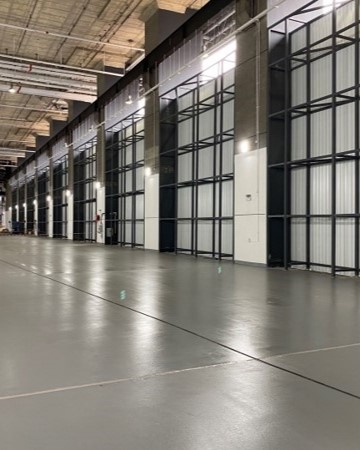
Warehouse
Warehouse floors experience continuous movement from forklifts and AMR. Epoxy flooring helps improve wear resistance while reducing concrete dust and simplifying maintenance.
Logistics Centre
Logistics facilities operate for extended hours with frequent goods movement. Epoxy flooring provides a durable working surface suitable for long-term warehouse operations.
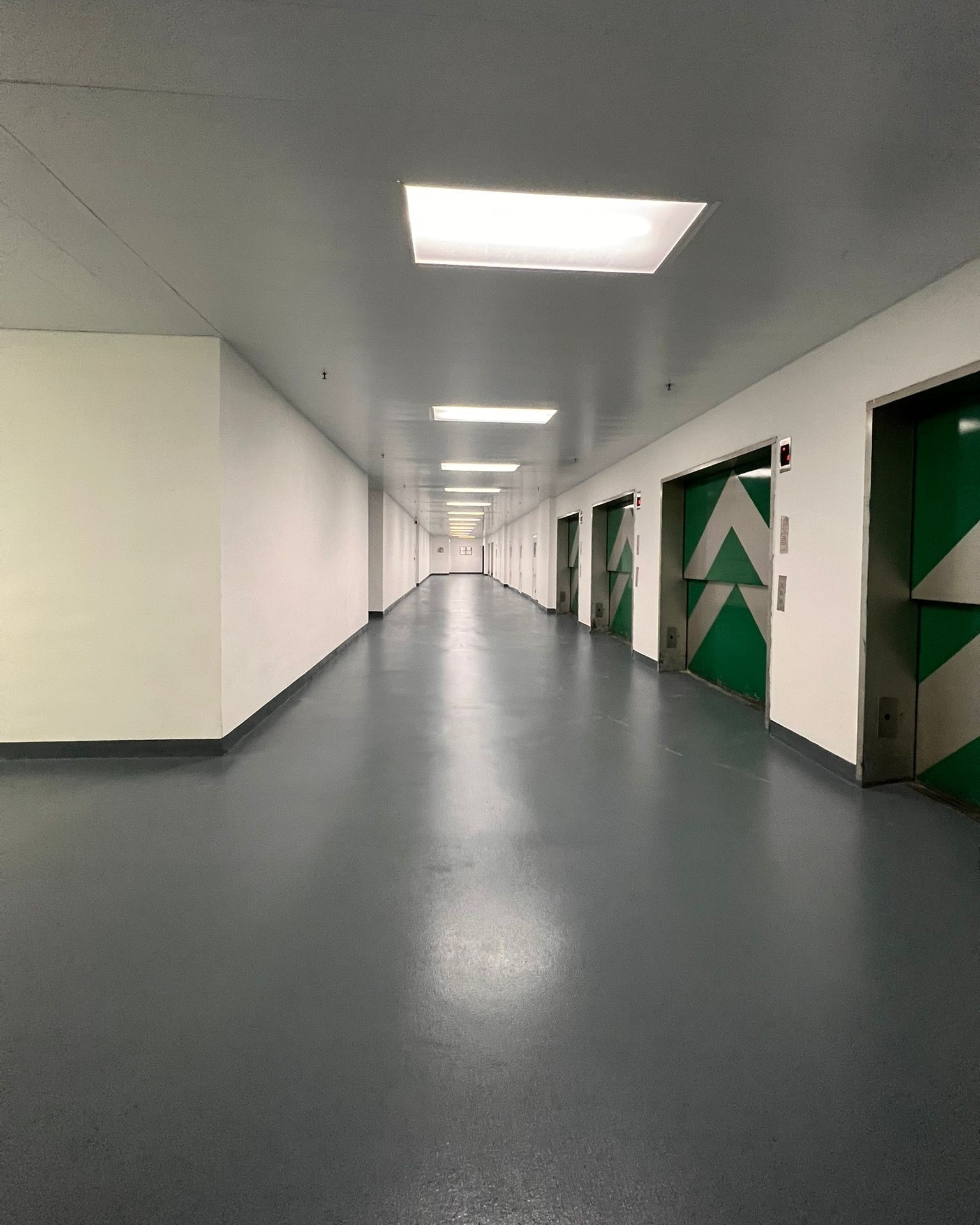
Manufacturing Facility
Manufacturing environments may require resistance to chemicals, oils or electrostatic discharge. Different epoxy flooring can be specified according to production requirements.
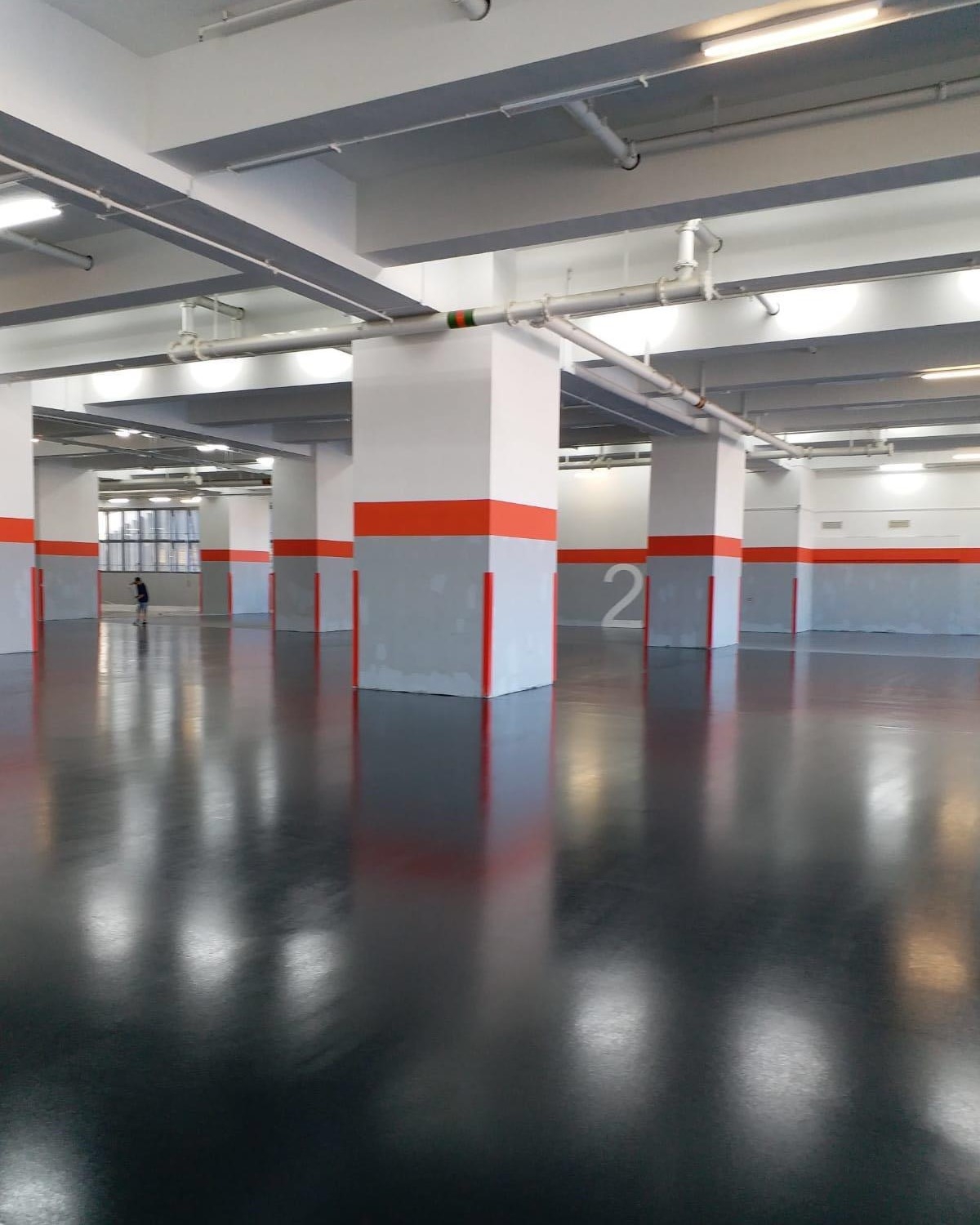
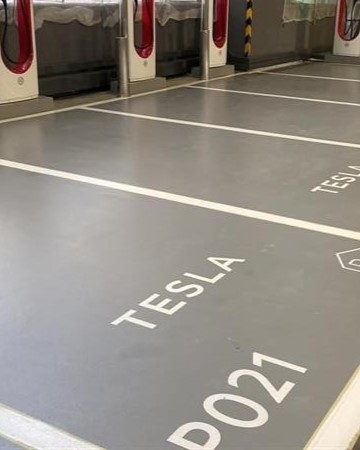
Car Park
Car park floors are subjected to vehicle traffic, tyre abrasion, oils and cleaning chemicals. Epoxy flooring provides a durable surface while supporting clear traffic markings and pedestrian routes.
Commercial Office
Commercial offices and supporting operational areas benefit from seamless flooring that is easy to maintain while providing a clean and professional appearance.
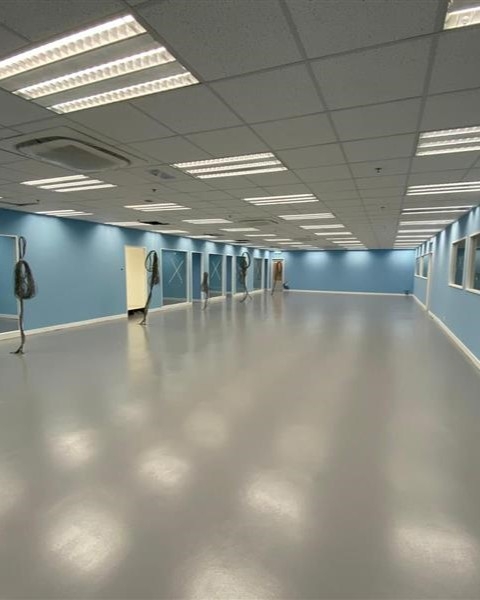
Exhibition Space
Exhibition and display areas require flooring that is both practical and presentable. Epoxy flooring provides a durable finish suitable for public-facing commercial environments.
 |
 |
 |
| Warehouse | Factories | Commercial Offices |
 |
 |
 |
| Logistics Centres | Carparks | Exhibition Spaces |
Epoxy Flooring Installation Process
The long-term performance of an epoxy flooring depends on proper planning, surface preparation and installation. Even the highest-quality epoxy material cannot perform as intended if it is applied to an unsuitable concrete surface.
Although the installation process may vary depending on site conditions and the selected flooring, most industrial epoxy flooring projects follow the stages below.
-
Site Assessment
Every project begins with an on-site inspection to evaluate the existing concrete floor. Factors such as floor condition, moisture content, cracks, previous coatings, traffic volume and operational requirements are assessed before recommending an appropriate flooring.
A site assessment also helps determine whether localised repairs or complete floor resurfacing should be carried out before the epoxy flooring is installed.
-
Surface Preparation
Surface preparation is one of the most important stages of the project.
Loose concrete, damaged coatings, oil contamination and surface dust are removed using professional floor grinding equipment. Cracks, holes and uneven areas are then repaired to provide a sound substrate for the new flooring.
Proper surface preparation improves the bond between the epoxy flooring and the concrete floor, helping to reduce the risk of premature peeling or delamination.
-
Primer Application
Once the concrete surface has been prepared, an epoxy primer is applied to improve adhesion and seal the concrete substrate.
Depending on the condition of the existing floor, additional repair materials or levelling compounds may be used before the main flooring is installed.
-
Epoxy Flooring Installation
The epoxy flooring is installed according to the selected specification and required thickness.
Depending on the operational environment, the flooring may include:
- Slip-resistant finishes
- Chemical-resistant coatings
- Electrostatic discharge (ESD) flooring
- Heavy-duty industrial flooring
- Coloured floor finishes and line markings
The flooring specification should always be selected according to the intended use of the facility rather than applying a standard solution to every project.
-
Curing and Inspection
After installation, the flooring is allowed to cure before being put into service.
The curing period varies depending on the selected flooring, environmental conditions and site temperature.
A final inspection is carried out to confirm that the flooring has been installed in accordance with the project specification before the area is handed over for normal operation.
Signs Your Concrete Floor May Need Refurbishment
Concrete floors gradually deteriorate through everyday use. In warehouses, factories, logistics centres and car parks, continuous traffic and operational activities can accelerate surface wear. If the floor begins to show the following conditions, it may be time to consider concrete floor refurbishment or an epoxy flooring.
Concrete Dust Is Increasing
If dust continues to accumulate on shelving, machinery or stored goods even after regular cleaning, the concrete surface may be breaking down. Surface dusting is one of the most common signs of concrete deterioration.
Forklift Routes Are Wearing Faster Than Other Areas
Forklift lanes and loading areas are often subjected to heavier traffic than surrounding floor areas. Localised wear, surface polishing or exposed aggregate may indicate that the concrete surface requires refurbishment.
Cracks and Local Repairs Are Becoming More Frequent
Minor cracks are common in concrete floors. However, when local repairs become increasingly frequent or larger sections of the floor begin to deteriorate, resurfacing may provide a more practical long-term solution than repeated patch repairs.
Oil Stains Have Penetrated the Concrete
Untreated concrete is porous. Once oils, lubricants or chemicals penetrate the concrete surface, they become increasingly difficult to remove and may continue to affect the appearance and condition of the floor.
Floor Markings Are No Longer Clearly Visible
In warehouses and logistics facilities, faded pedestrian walkways, forklift routes and safety markings can reduce operational efficiency and workplace safety. Floor refurbishment provides an opportunity to restore these markings as part of the flooring.
Cleaning and Maintenance Are Becoming More Time-Consuming
If routine cleaning no longer produces satisfactory results, or the floor requires frequent repairs to maintain its condition, it may indicate that the existing concrete surface has reached the end of its effective service life.
Why Choose BPS Global?
Choosing an epoxy flooring contractor involves more than selecting a flooring product. The quality of the finished floor depends on proper assessment, surface preparation, material selection and installation.
With more than 30 years of experience in industrial and commercial engineering projects across Hong Kong, BPS Global provides epoxy flooring solutions for warehouses, logistics centres, manufacturing facilities, commercial premises and car parks.
Our engineering team evaluates each project individually to recommend a flooring based on the site's operational requirements, expected traffic conditions and long-term maintenance objectives.
BPS Global operates under certified management systems, including ISO 9001, ISO 14001 and ISO 45001, ensuring that projects are delivered with consistent quality, environmental management and workplace safety standards.
Our project portfolio includes logistics operators, manufacturers, commercial property owners and multinational organisations throughout Hong Kong.
Project Case Studies
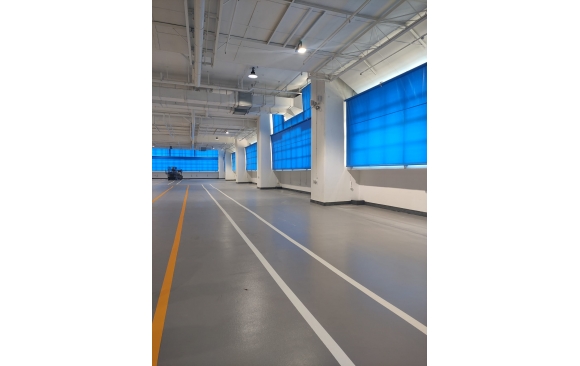
Case Study 1 – 300,000 sq.ft. Logistics Warehouse & Office Development
BPS Global was appointed as the Design and Build contractor for a logistics warehouse and office development covering approximately 300,000 square feet for an international beverage manufacturer in Hong Kong.
The project involved the planning and coordination of multiple engineering disciplines within a five-month construction programme. As part of the warehouse construction, durable epoxy flooring was installed to support long-term logistics operations.
Project Challenges
The warehouse was designed to accommodate continuous forklift traffic, pallet movement and high-volume logistics activities. The flooring therefore needed to provide sufficient wear resistance while reducing concrete dust generation and supporting routine warehouse maintenance.
Epoxy Flooring Solution
Following assessment of the operational requirements, a multi-layer epoxy flooring was installed throughout the warehouse area. The flooring was selected to improve abrasion resistance, reduce concrete dusting and provide a seamless working surface suitable for daily logistics operations.
Floor markings were incorporated into the warehouse layout to define forklift routes, pedestrian walkways and operational zones, helping to improve workplace organisation and site safety.
The completed flooring continues to support day-to-day warehouse operations while providing a surface that is easier to maintain than untreated concrete.
Case Study 2 – Residential Car Park Refurbishment, Tseung Kwan O
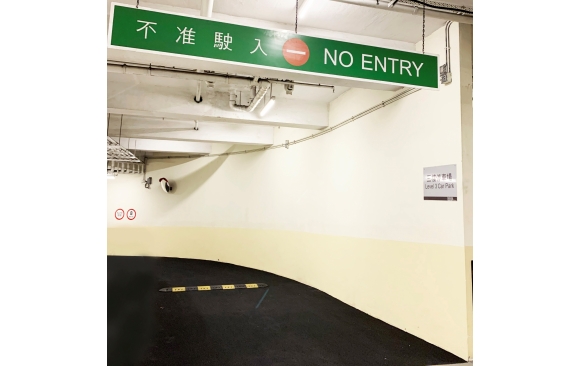
BPS Global completed the refurbishment of a residential car park for a private housing development in Tseung Kwan O.
The existing floor surface showed signs of long-term wear after years of vehicle traffic and daily use. The refurbishment project included removal of the deteriorated surface followed by installation of a new epoxy flooring.
Project Challenges
Car park floors are continuously exposed to vehicle movement, tyre abrasion, oil contamination and routine cleaning chemicals. The replacement flooring therefore needed to provide improved durability while remaining suitable for daily operation and maintenance.
Epoxy Flooring Solution
After preparing the existing concrete surface, a new epoxy flooring was installed across the car park.
The epoxy flooring provides improved resistance to abrasion and common automotive chemicals while creating a seamless surface that is easier to maintain. New floor markings were also incorporated to improve traffic flow and clearly define parking bays and pedestrian areas.
The completed refurbishment has provided a practical flooring solution that supports the daily operation of the residential car park.
Case Study 3 – ATL Logistics Centre Warehouse Floor Refurbishment
BPS Global carried out an epoxy flooring refurbishment project for a warehouse within ATL Logistics Centre, one of Hong Kong's major logistics facilities.
The warehouse floor had experienced gradual wear due to continuous pedestrian movement and material handling activities. The refurbishment aimed to restore the concrete floor and improve its suitability for long-term warehouse operations.
Project Challenges
Warehouse floors within logistics centres are subjected to frequent pedestrian traffic, pallet movement and handling equipment throughout daily operations. Surface wear gradually increases maintenance requirements and may affect operational efficiency.
Epoxy Flooring Solution
Following preparation of the existing concrete floor, a new epoxy flooring was installed throughout the warehouse.
The flooring provides a more durable working surface while reducing concrete dust generation and improving routine cleaning. The completed floor is better suited to the operational demands of a busy warehouse environment and supports ongoing logistics activities.
Epoxy FAQ
- Can epoxy flooring be applied directly over an existing concrete floor?
Not always. The existing concrete must first be assessed to determine its condition. If the floor has loose concrete, surface dusting, oil contamination, cracks or failing coatings, these issues should be addressed before the epoxy flooring is installed. Proper surface preparation helps improve adhesion and extends the service life of the finished floor.
- What is the difference between epoxy flooring and conventional floor paint?
Conventional floor paint is primarily used to improve appearance and normally provides limited protection against wear. Epoxy flooring forms a thicker resin-based surface that offers improved abrasion resistance, durability and ease of maintenance, making it more suitable for industrial and commercial environments.
- Is epoxy flooring suitable for forklift operations?
Yes. Epoxy flooring is commonly used in warehouses and logistics facilities where forklifts and pallet trucks operate regularly. The flooring specification should be selected according to traffic frequency, equipment weight and operational requirements to ensure suitable long-term performance.
- How do I choose the appropriate epoxy flooring thickness?
The appropriate thickness depends on several factors, including the condition of the existing concrete floor, expected traffic volume, equipment loads and the intended use of the facility. A site assessment should always be carried out before selecting the flooring specification.
- Does the facility need to shut down during epoxy flooring installation?
Not necessarily. The installation programme depends on the size of the project, the condition of the existing floor and the client's operational requirements. For warehouses, logistics centres and manufacturing facilities that remain in operation, the work can often be carried out in phases or scheduled during evenings, weekends or planned maintenance periods to minimise disruption.
- How long does epoxy flooring last?
The service life of an epoxy flooring depends on several factors, including the flooring specification, traffic conditions, loading, maintenance practices and the operating environment.
With an appropriate flooring, proper installation and routine maintenance, epoxy flooring can provide many years of service before refurbishment is required.
Regular inspections and localised repairs can also help extend the overall service life of the flooring.
- Is epoxy flooring suitable for car parks?
Yes. Epoxy flooring is commonly used in residential, commercial and industrial car parks because it provides improved resistance to vehicle traffic, tyre abrasion, oil contamination and routine cleaning chemicals.
It also provides a suitable surface for incorporating traffic lanes, parking bays, directional arrows and pedestrian walkways as part of the overall car park layout.
- How should epoxy flooring be maintained?
Routine maintenance is relatively straightforward.
Dust, sand and debris should be removed regularly to minimise surface abrasion. Oil, chemicals and other liquid spills should be cleaned promptly to prevent staining.
For facilities with heavy daily traffic, periodic inspections are recommended so that worn areas can be repaired before more extensive refurbishment becomes necessary.
Planning an Epoxy Flooring Project?
Every facility operates under different conditions, and there is no single flooring suitable for every application. When selecting an epoxy flooring, factors such as the condition of the existing concrete floor, traffic volume, equipment loads, operational requirements and maintenance objectives should all be considered.
BPS Global provides site inspections, technical recommendations and epoxy flooring solutions for industrial and commercial facilities throughout Hong Kong. Our engineering team works with clients to recommend flooring based on practical operational requirements rather than adopting a one-size-fits-all approach.
If you are planning a concrete floor refurbishment or considering epoxy flooring for your facility, our engineering team will be pleased to discuss your project requirements.
- Email: enquiry@bps-group.net
- Telephone: 2763 6874
- WhatsApp: 9514 8812
Download: Epoxy Floor Coating Sales Sheet